Best IVF and Fertility Clinics in Oman
Top IVF Clinics in Oman
Clinics with the highest ratings and verified quality care in this region.
Atentica Fertilitate și Ginecologie
Clinica Atentica enjoys a strong reputation for delivering compassionate, patient‑centered fertility care. The clinic’s medical team, including Dr. Vanda Hatman, Dr. Karina Panaite, Dr. Andrei Dumitrescu, Dr. Adrian Borș, Dr. Ana‑Maria Cozoreanu, and Dr. Alina Gontariu, consistently provides empathetic consultations, clear explanations, and hands‑on support throughout IVF cycles. Success stories highlight first‑embryo‑transfer pregnancies and smooth ovarian puncture procedures, reflecting effective clinical protocols and a well‑equipped on‑site laboratory, pharmacy, and ancillary services. Facilities are noted for high hygiene standards, comfort, and a calming environment. However, several patients experienced delayed responses from doctors such as Dr. Alina Gontariu and Dr. Anca Ștefan, unclear rationale for certain tests, and occasional awkward interactions with reception staff. A few reports mention perceived financial focus by Dr. Adrian Borș and last‑minute appointment cancellations without alternative options. Overall, the clinic is recommended for its skilled staff and comprehensive services, while prospective patients should verify communication expectations and appointment flexibility.
ART Fertility Clinics | Best IVF & Fertility Clinic Muscat, Oman
ART Fertility Clinics is a leading fertility and IVF clinic network located in the United Arab Emirates, with flagship centres in Abu Dhabi (Villa No. B22‑25, Marina Village), Dubai (Jumeirah Street, Umm Suqeim 3, opposite Burj Al Arab) and Al Ain (Hamdan Bin Mohammad St – 61 Al Tamam St), specializing in comprehensive assisted reproductive technologies for both male and female infertility. The clinic offers a full spectrum of services including IVF, ICSI, IUI, assisted hatching, ovarian stimulation, gender selection, fertility preservation (egg, embryo and sperm freezing), advanced diagnostics (ultrasound, ERA, HSG, genetic testing such as PGT‑A, PGT‑SR, PGT‑M, karyotyping and endometrial microbiota analysis) and treatment of complex conditions like PCOS, endometriosis, recurrent miscarriage and azoospermia. Distinctive features include an in‑house state‑of‑the‑art genetics laboratory (ART Genomics), cutting‑edge equipment, transparent pricing, and a commitment to ethical, compassionate care that has yielded “impressive success rates” in assisted reproduction. A multidisciplinary team of experienced reproductive specialists, embryologists and support staff delivers personalized, evidence‑based treatment plans, while the International Patient Services unit provides multilingual coordination, complimentary video consultations, travel and accommodation assistance, and seamless after‑care, ensuring a supportive, patient‑centred journey from first contact to successful pregnancy.
Advanced Fertility & Genetics Center
Advanced Fertility and Genetics Center is a comprehensive reproductive medicine clinic located in Jordan, specializing in infertility treatment and genetic diagnostics; the center offers a full spectrum of services including conventional IVF, ICSI, IVM, IUI, blastocyst-stage embryo transfer, assisted hatching, TESE/PESA surgical sperm retrieval, extensive cryopreservation programs for embryos, sperm and oocytes, pre‑implantation genetic diagnosis (PGD) and multi‑chromosomal screening, as well as 4D HD ultrasound and personalized nutritional counseling for pre‑ and post‑treatment care. Led by Dr. Fawzi Abdulhamid, a senior consultant in obstetrics‑gynecology, minimally invasive surgery and infertility with Jordanian and Arab board certifications, the clinic’s multidisciplinary team combines experienced embryologists, reproductive endocrinologists and genetic specialists who apply cutting‑edge techniques such as plasma‑saturated platelet therapy and ovarian tissue cryopreservation. The laboratory’s expertise is highlighted by active participation in international conferences (ESOG, FIGO, ESHRE, ASRM, Amsterdam 360º ART) and ongoing research collaborations, underscoring a commitment to evidence‑based practice. Patient support is reinforced through detailed dietary guidelines, continuous counseling, and a dedicated appointment system, ensuring a compassionate, individualized approach throughout the fertility journey.
Embryos
Embryos is a fertility clinic located in Romania, with centers in Oradea, Târgoviște and Buzău, specializing in assisted reproductive technologies and comprehensive infertility treatment; the clinic offers a full spectrum of services including in‑vitro fertilisation (IVF), intracytoplasmic sperm injection (ICSI), embryo cryopreservation, pre‑implantation genetic testing (PGT), intra‑uterine insemination (IUI), hysteroscopic procedures, ovarian reserve assessment, and male factor therapies, all supported by state‑of‑the‑art laboratory equipment and modern operating suites; Embryos distinguishes itself with the highest national volume of embryo transfers and the greatest number of children born through IVF, reporting a 71 % pregnancy rate per transfer, a 99.66 % embryo survival rate and a 90 % fertilisation rate, figures confirmed by the National Transplant Agency for 2024; the multidisciplinary team comprises more than 30 specialists—including senior obstetric‑gynecologists, embryologists, urologists, endocrinologists, psychologists and dedicated nursing staff—each with over a decade of experience in reproductive medicine, and they provide personalised treatment plans, continuous emotional counselling, online appointment scheduling, a patient‑focused call centre (021 9353), educational blog articles and a newsletter to ensure comprehensive support throughout every step of the journey.
Care Fertility
Care Fertility is a leading fertility clinic operating across a national network of clinics in the United Kingdom, specializing in assisted reproductive technologies such as IVF, ICSI, egg and sperm donation, and fertility preservation, with a focus on personalized, patient‑centred care. The clinic offers comprehensive services including pre‑treatment assessments, a range of treatment packages (Value, Classic, Enhanced, Advanced), NHS‑funded options, private insurance coordination, and flexible financing through Refund, Multi‑Cycle, interest‑free credit and Klarna, as well as specialist training, research collaborations and university partnerships that keep its protocols at the forefront of scientific advancement. Boasting world‑renowned fertility doctors, embryologists and a Chief Medical Officer, Care Fertility highlights its “top success rates” and thousands of five‑star Trustpilot reviews as evidence of clinical excellence. Its professional approach combines cutting‑edge research, a multidisciplinary team and a commitment to transparency, while patient support is reinforced through dedicated guides, clear cost breakdowns, continuous emotional support, and a promise that patients will feel seen, heard and supported at every step of their journey toward parenthood.
Genesys Fertility Center
Genesys Fertility Center is a leading fertility and reproductive health clinic located in Bucharest, Romania (Str. Căpitan Nicolae Drossu Nr. 9, Sector 1), specializing in assisted human reproduction with a primary focus on in‑vitro fertilization (IVF) and comprehensive infertility treatment; the center also offers reproductive surgery, urology, ovarian rejuvenation, aesthetic surgery, maternal‑fetal medicine and dermatology. Boasting the highest success rate in the country and one of the highest worldwide, Genesys reports that infertility can be successfully treated in over 95 % of cases and has conceived the most children via IVF nationally, supported by its accreditation for IVF procedures and participation in the Government‑backed National IVF Program 2022‑2023 which provides funding assistance for families and single women. Unique features include cutting‑edge technologies, personalized treatment plans, full‑process support—including file preparation, SMS notifications and continuous emotional guidance—and a commitment to making the “impossible possible.” The multidisciplinary team of primary‑care physicians, specialist doctors, nurses and support staff brings extensive expertise in assisted reproduction, laparoscopy, hysteroscopy, maternal‑fetal medicine and obstetric‑gynecological ultrasound, ensuring a professional, compassionate approach that combines clinical excellence with customized patient care and comprehensive counseling throughout every stage of the fertility journey.
Centrul VIVAMED – FIV
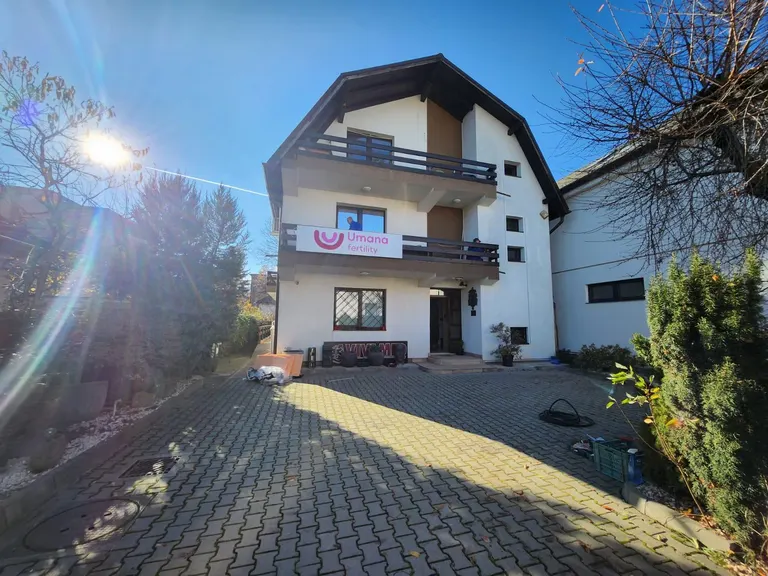
Umana Fertility Brașov is a full‑service assisted reproduction clinic located in Brașov (Strada Decebal 82, 500334), specializing in the diagnosis and treatment of infertility with a focus on in‑vitro fertilization (IVF), pre‑implantation genetic testing and comprehensive reproductive genetics; the centre uniquely combines the 20‑year legacy of Vivamed—accredited nationally since 2008 and the only assisted‑reproduction facility in the region—with the innovative protocols of the newer Umana Fertility brand, offering couples access to advanced technologies, a senior embryology laboratory led by Mihaela Radu and a multidisciplinary team of experts including Dr. Gabriela Lupu, Dr. Flaviu Gliga, Dr. Corina Manolea, Dr. Corina Gică and Dr. Mirona Furtună, all committed to personalized, empathetic care. Since its 2024 launch the clinic has reported “remarkable results” with hundreds of successful pregnancies, and it further distinguishes itself by facilitating a 15,000 lei financial grant through the National IVF Program 2025, providing dedicated counseling, flexible appointment hours and continuous patient support throughout every treatment stage.
ORIGYN Fertility Center
Origyn Fertility Center, operating alongside Origyn Medical Center in Romania, is a comprehensive reproductive medicine clinic specializing in assisted reproductive technologies such as In‑Vitro Fertilization (IVF), cryopreservation, and a range of additional fertility procedures. The center addresses both female and male infertility, offering personalized diagnostic work‑ups, genetic testing, infertility surgery, and fertility‑preservation programs, while also providing patient‑preparation guidance, real‑patient stories, and an extensive FAQ library to empower couples on their journey to parenthood. A multidisciplinary team of experienced reproductive endocrinologists, embryologists, urologists, and genetic counselors collaborates closely to design evidence‑based, individualized treatment plans, emphasizing safety, trust, and success. Patient support services include dedicated counseling, multilingual informational articles authored by specialists, and streamlined appointment scheduling through their online portal, ensuring continuous care from the first consultation through post‑treatment follow‑up. Although specific success rates are not disclosed on the website, the clinic highlights its commitment to high standards of clinical excellence and patient‑centered care, positioning Origyn Fertility Center as a trusted partner for those seeking advanced fertility solutions.
Popular Destinations in Oman
Explore popular cities and regions in Oman.

Frequently Asked Questions
Everything you need to know about fertility treatment in Oman.
Is IVF legal in Oman?
expand_more
IVF is legal in Oman, and its practice is governed by regulations issued by the Ministry of Health.
These regulations are based on Shari’a Law and Islamic principles, with the Ministry of Health acting as the primary regulatory authority for assisted reproductive technologies in both public and private fertility centers. Key aspects of the regulations include the requirement that IVF be performed for legally married couples using only their own gametes, and that both partners provide formal written consent for all procedures.
Additional regulations cover embryo transfer limits based on the woman’s age, gamete storage duration, and the permissible use of pre-implantation genetic diagnosis for couples with documented genetic risks, subject to specific criteria and age limitations.
Is sperm donation legal in Oman?
expand_more
Sperm donation is not permitted in Oman due to the country’s adherence to Shari’a Law and Islamic principles regarding reproductive technologies.
Regulations for assisted reproductive technologies, including IVF, are founded on these religious and legal frameworks, specifically prohibiting the use of donated sperm or eggs; women are only permitted to use sperm from their husbands. This prohibition is based on interpretations of Islamic law that consider sperm donation a form of adultery, and as a result, there are no legal frameworks or regulations for sperm donation in Oman, including guidelines regarding anonymity, donor requirements, or compensation.
Why choose Oman for IVF?
expand_more
Oman is an attractive destination for IVF treatment due to its combination of affordability, high-quality medical care, and a supportive legal and cultural environment.
IVF in Oman is generally more cost-effective than in many Western countries, with a single cycle estimated to cost between OMR 2,500 and OMR 4,500 (approximately USD 6,500 to USD 11,700), often including consultations, medications, and lab work, and some centers offering packages from around OMR 1,300. The country also features state-of-the-art fertility centers staffed by experienced specialists utilizing advanced technologies, with cumulative live birth rates reported as high as 64% for patients under 35 and up to 65% for women under 40 in certain private clinics, with overall average success rates between 50% and 85% for women under 35 per cycle.
Oman’s legal framework permits IVF for married couples, requiring written consent and a certificate of infertility, and is based on Shari’a Law and Islamic principles, providing a culturally sensitive approach to treatment. Options such as ICSI and PGT are also available, and while details on donor programs are limited, egg and sperm freezing are generally available, with some agencies mentioning egg/sperm donor programs.
Can single women do IVF in Oman?
expand_more
In Oman, IVF treatment is only legally permitted for married couples, and single women are not allowed to undergo the procedure.
This restriction is based on the country’s governing principles of Sharia Law and Islamic rules regarding IVF regulations, which also prohibit the use of donor sperm for unmarried individuals. Public funding for IVF is available, but is limited to married couples who meet specific criteria, such as not having existing healthy children.
Is reciprocal IVF (ROPA) allowed in Oman?
expand_more
Reciprocal IVF, also known as shared motherhood, is not permitted in Oman due to the country’s regulations regarding the use of donor gametes.
Oman’s IVF regulations strictly require that only a couple’s own eggs and sperm be used in the process, which inherently excludes reciprocal IVF as it necessitates the use of eggs from one partner and donor sperm for fertilization. Omani law is based on Sharia principles and does not legally recognize same-sex relationships, further contributing to the prohibition of ROPA and the lack of provisions for parental recognition for same-sex partners in assisted reproduction.
Several fertility clinics, including Fakih IVF Oman and Al-Bushra Medical Specialty Complex, operate within Oman but are bound by these strict regulations, offering standard IVF procedures only to married couples utilizing their own gametes.
How much does IVF cost in Oman?
expand_more
The cost of IVF in Oman typically ranges from approximately OMR 1,300 to OMR 4,500 per cycle, which is equivalent to roughly $3,377 to $11,700 USD.
A standard IVF cycle generally falls between OMR 1,300 and OMR 1,900, or $3,377 to $4,935 USD, though private clinics may charge between OMR 2,500 and OMR 4,500 ($6,500 to $11,700 USD) per cycle. Some clinics offer comprehensive IVF/ICSI packages for around OMR 1,700 ($4,420 USD), while others quote between OMR 1,500 and OMR 2,000 ($3,900 to $5,200 USD) per cycle.
It is important to remember that medication costs are a significant part of the overall expense, and additional procedures like Intracytoplasmic Sperm Injection (ICSI) or Preimplantation Genetic Testing (PGT) can further increase the total cost. While specific costs for egg donation in Oman are not readily available, international estimates suggest it can add substantially to the overall treatment expenses.
What is the IVF success rate in Oman?
expand_more
IVF success rates in Oman vary based on factors like a woman’s age, the specific clinic chosen, and whether she uses her own eggs or donor eggs.
For women under 35, success rates are reported between 50% and 85% per cycle, with some clinics reporting even higher rates, up to 98% for those aged 20-25 and up to 95% for those aged 25-35. As age increases, success rates decline, ranging from 30% to 73% for women aged 35-40, and potentially between 15% and 70% for those aged 40-45, with rates falling below 5% for women over 42 using their own eggs.
IVF using donor eggs generally shows higher success rates, especially with increasing maternal age, with some Omani clinics reporting rates between 70% and 85% per cycle. While international benchmarks suggest 45% to 55% live birth rates per single embryo transfer for women under 35, some Omani clinics report significantly higher rates, though these figures can vary due to differences in data collection and treatment protocols.
Are egg donors anonymous in Oman?
expand_more
Egg donation is not legally permitted in Oman, so the question of donor anonymity does not arise.
IVF treatment is allowed in Oman, but only using the eggs and sperm of the intended parents; the use of donor gametes, including egg donors, is prohibited by law. Because donor gametes are not used, there are no regulations or considerations regarding anonymity, access to donor information, or changes to anonymity laws.
Can you choose gender with IVF in Oman?
expand_more
Gender selection for non-medical reasons is not permitted in Oman. Preimplantation Genetic Diagnosis (PGD) and Preimplantation Genetic Screening (PGS) are allowed, but only for couples who have a genetic risk and have been recommended for PGD by a qualified geneticist.
To qualify for PGD in Oman, a specific genetic disorder must be identified within the family, and there must be evidence suggesting the potential for serious impairment in the child. Therefore, PGD cannot be used for family balancing or to select the gender of a baby for any reason other than preventing serious, sex-linked genetic disorders.
Exceptions to the prohibition of gender selection are made only when there are medical reasons, such as preventing the birth of a child with a severe genetic condition that is tied to a particular sex.
Is surrogacy legal in Oman?
expand_more
Surrogacy is not legal in Oman, and both commercial and altruistic arrangements are prohibited.
Oman’s legal framework does not recognize surrogacy agreements, meaning the woman who delivers the child is legally recognized as the mother. While specific penalties for engaging in surrogacy are not outlined, the practice is considered unlawful and conflicts with prevailing religious and cultural values.
Is egg donation legal in Oman?
expand_more
Egg donation is not legally permitted in Oman.
Oman’s IVF regulations are founded on Shari’a Law and Islamic principles, which prohibit the use of donated eggs or sperm from non-married couples, allowing only the use of sperm from a woman’s husband. Reproductive technology in Oman is restricted to married couples with written consent, and the Ministry of Health’s regulations explicitly state that only the couple’s own eggs and sperm can be used in IVF procedures.
Because egg donation is not permitted, there are no established rules regarding donor age limits or compensation within Omani law.
Is embryo donation legal in Oman?
expand_more
Embryo donation is not legally permitted in Oman, as the country’s legal framework for assisted reproductive technologies is based on Sharia Law and Islamic principles.
Current regulations strictly prohibit the use of donated sperm or eggs from non-married couples, and women are only permitted to use sperm from their husbands; this prohibition effectively extends to embryo donation, which requires the use of donated gametes.
Oman’s regulations for assisted reproduction technologies are strictly for married couples, emphasizing that only the couple’s own gametes can be used, and as such, there are no provisions for who can receive donated embryos or specific anonymity rules related to embryo donation.
Can gay couples do IVF in Oman?
expand_more
Currently, male same-sex couples cannot utilize IVF services in Oman due to legal restrictions based on Sharia Law and Islamic principles.
Oman legally permits IVF only for married heterosexual couples, and the use of donor sperm or eggs is prohibited when the donors are not married. As male same-sex couples would require donor sperm and/or eggs to pursue IVF, they are unable to access these treatments within the country. Furthermore, same-sex relationships are not legally recognized in Oman, and there is no legal framework for parental recognition for same-sex couples.
Information regarding surrogacy in Oman is limited, but given the conservative legal and cultural context, it is highly unlikely to be a viable option for same-sex couples. The legal landscape strictly adheres to heterosexual, married couples for assisted reproductive technologies and does not recognize other family structures.
Can lesbians do IVF in Oman?
expand_more
Lesbian couples can legally access In Vitro Fertilization (IVF) and reciprocal IVF (ROPA method) in Oman, despite same-sex relationships being illegal in the country.
Although there are no explicit legal barriers to undergoing these fertility treatments, the use of donated sperm is prohibited for unmarried couples due to Islamic principles regarding lineage. This means a lesbian couple can pursue pregnancy through IVF where one partner provides the eggs and the other carries the pregnancy, but they cannot use donor sperm within Oman.
Omani law emphasizes a direct link of lineage to a married couple, and while the legal framework for parental recognition for children born through IVF to lesbian couples is not explicitly detailed, it may be complex or not formally recognized.
How does IVF work in Oman?
expand_more
In Oman, IVF is a regulated and established infertility treatment that combines modern medical practices with Islamic principles, typically involving ovarian stimulation, egg retrieval, fertilization, and embryo transfer.
The standard IVF protocol begins with hormone-based ovarian stimulation for 7 to 10 days, monitored by ultrasound and blood tests, followed by a minor surgical egg retrieval and sperm preparation. Fertilization occurs in a laboratory, and embryos are cultured for several days, sometimes up to the blastocyst stage, before transfer into the uterus. A pregnancy test is then performed approximately two weeks post-transfer. Techniques like ICSI are also utilized, especially in cases of male infertility, involving direct sperm injection into the egg.
A full IVF cycle usually takes 21 to 25 days, with many injections able to be self-administered at home. For international patients, some preparation can occur at home, requiring a shorter stay in Oman – around 5-7 days – for egg retrieval and embryo transfer, following an initial consultation involving medical history, examination, and testing.