Best IVF and Fertility Clinics in United Kingdom
Find the best IVF and fertility clinic in United Kingdom for you. Compare patient reviews, treatment options and IVF costs in United Kingdom.
Top IVF Clinics in United Kingdom— Page 4
Compare IVF treatment costs and patient ratings across fertility clinics in United Kingdom.

Care Fertility Liverpool
Care Fertility Liverpool is a highly reputable fertility clinic in Liverpool, United Kingdom, known for…

abc ivf
abc ivf in Nottingham, United Kingdom, is a highly regarded fertility clinic specializing in high-quality,…

Dr. Lauren Sundheimer
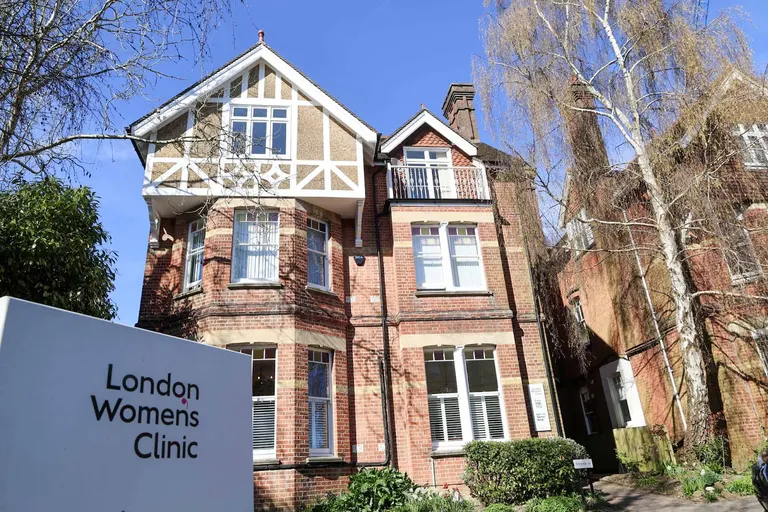
London Women's Clinic
London Women's Clinic in Royal Tunbridge Wells, United Kingdom, is a highly reputable fertility clinic…

Artemis Gynaecology
Artemis Gynaecology is a reputable fertility clinic in London, United Kingdom, known for its personalized…

London Women's Clinic
London Women's Clinic in Bristol, United Kingdom provides expert fertility care in a modern, supportive,…

Egg Freezing - London Women's Clinic
Egg Freezing - London Women's Clinic in the City of Westminster, United Kingdom, is a…
CREATE Fertility Southampton
CREATE Fertility Southampton is a highly regarded fertility clinic in Southampton, United Kingdom, known for…

abc ivf Bristol
abc ivf Bristol is a highly regarded fertility clinic in Bristol, United Kingdom, renowned for…

Procreate Fertility Center of Virginia, Newport News
Procreate Fertility Center of Virginia, Newport News is a highly regarded fertility clinic in Newport,…

London Women's Clinic
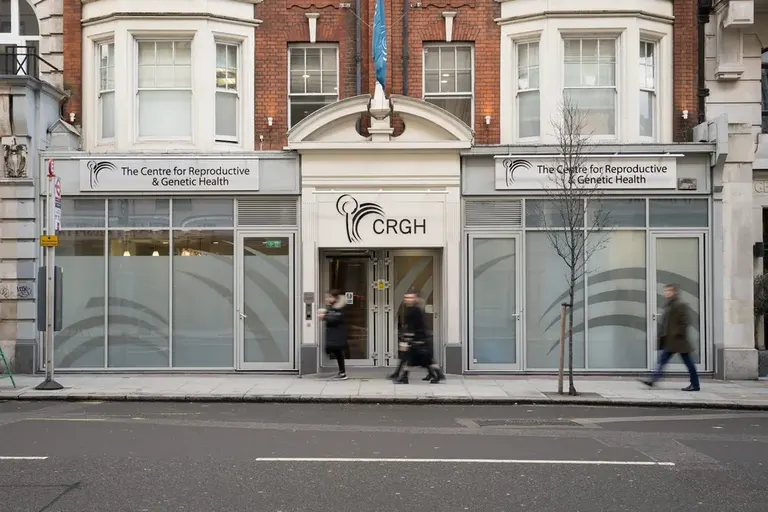
CRGH Portland
CRGH Portland is a highly reputable fertility clinic in London, United Kingdom, renowned for its…
IVF success rates in United Kingdom
Explore national outcomes for donor eggs, frozen embryo transfers and fresh IVF or ICSI. Find your age group and treatment, and compare with the EU reference where equivalent data are available.
| Recipient age | Rate |
|---|---|
| 18–34 years | 46% |
| 35–37 years | 46% |
| 38–39 years | 41% |
| 40–42 years | 45% |
| 43–44 years | 47% |
| 45+ years | 41% |
Donor eggs · partner sperm
| Age group | Rate |
|---|---|
| 18–34 years | 46% |
| 35–37 years | 41% |
| 38–39 years | 37% |
| 40–42 years | 31% |
| 43–44 years | 19% |
| 45+ years | Not published |
Own eggs · partner sperm
| Age group | Rate |
|---|---|
| 18–34 years | 39% |
| 35–37 years | 32% |
| 38–39 years | 24% |
| 40–42 years | 17% |
| 43–44 years | 8% |
| 45+ years | 6% |
Own eggs · partner sperm
These national results use their registry’s age bands, years, treatment groups and outcome definitions. The EU reference uses different definitions, so a direct difference is not calculated.
View EU reference (2020)
| Source age band | Donor eggsPer transfer | FrozenPer thaw | ICSIPer collection |
|---|---|---|---|
| <34 years | 45.7% | 38.8% | 25.6% |
| 35–39 years | 45.5% | 32.8% | 20.2% |
| 40+ years | 41.7% | 27.9% | 10.1% |
Equal weight per reporting EU-27 country. Donor eggs: 16 countries; frozen transfers: 18; fresh ICSI: 19. The medians are country reference values, rather than pooled patient success rates. ESHRE source
Source: HFEA · national dashboard
About these statistics
HFEA national dashboard, 2023 only. The three selections use donor eggs / partner sperm (all cycle types), patient eggs / partner sperm with frozen ICSI, and patient eggs / partner sperm with fresh ICSI. Native HFEA age bands are retained. For own eggs the dashboard uses age at egg collection or transfer if collection age is missing; donor cycles use recipient age at treatment. Rates use embryos transferred as the denominator, rather than transfer cycles. Dashboard values are rounded and small values/rates can be suppressed. Displayed rates are read from the pregnancy-rate card after setting each age, treatment, egg/sperm source and year filter. They are not directly comparable with the EU 2020 benchmark.
Questions to ask your clinic
- What are your clinical pregnancy and birth outcomes for patients of my age using the same egg source?
- Is the rate per started cycle, per egg collection, per thawing cycle or per transfer?
- Which treatment years and how many cases are included, and how do you account for missing follow-up?
- How do you follow up outcomes for patients who return to another country?
Popular Destinations in United Kingdom
Explore popular cities and regions in United Kingdom.


Frequently Asked Questions
Common questions about IVF in United Kingdom.
Reciprocal IVF, also known as shared motherhood, is permitted in the United Kingdom for same-sex female couples.
The Human Fertilisation and Embryology Act was amended in 2008 to legally recognize both female partners as parents, allowing both women to have a biological connection to their child, with one partner carrying the pregnancy. When performed at a clinic licensed by the Human Fertilisation and Embryology Authority (HFEA) with appropriate consent forms, both partners are regarded as the legal parents, and the sperm donor has no legal rights or responsibilities.
For parental recognition, if the couple is married or in a civil partnership, both partners automatically have parental responsibility. If not, conception must occur at a licensed UK fertility clinic, and the non-birth mother will typically need to complete forms to become the child's legal parent and be registered on the birth certificate. Couples undergoing this treatment require the same screening tests as heterosexual couples, including testing for HIV and Hepatitis B and C, though recent changes in November 2024 removed mandatory enhanced screening for the egg-providing partner.