Best IVF and Fertility Clinics in Georgia
Top IVF Clinics in Georgia
Clinics with the highest ratings and verified quality care in this region.
Vinsfertilty – IVF & Surrogacy Centre in Tbilisi, Georgia
Vinsfertility is a leading fertility and surrogacy clinic located in Delhi (Behind BSES Rajdhani Power Station, Katwaria Sarai, Delhi 110016), specializing in IVF, IUI, ICSI, surrogacy, egg and sperm donation, and advanced genetic testing (PGS/PGD) with a guaranteed IVF and surrogacy program that offers written assurance of outcomes, transparent pricing and no hidden charges; the clinic boasts over 11 years of experience, more than 750 five‑star Google reviews, 6 000+ IVF successes and an 80% IVF success rate alongside an 89%+ surrogacy success rate, having helped 1 000+ families achieve parenthood; its multidisciplinary team of internationally trained specialists—including Dr Reena Khandelwal, Dr Neema Sharma (MRCOG UK), Dr Mani Kapur and Dr Rekha Brar—delivers personalized fertility roadmaps using state‑of‑the‑art IVF labs and a global network of partner centers in India, Georgia, Kenya, Cyprus and Dubai; patients benefit from 24/7 support, flexible low‑interest EMI options, comprehensive counseling, and a compassionate, ethical approach that combines cutting‑edge technology with individualized care to minimize emotional and financial stress throughout the journey.
European Fertility Clinic
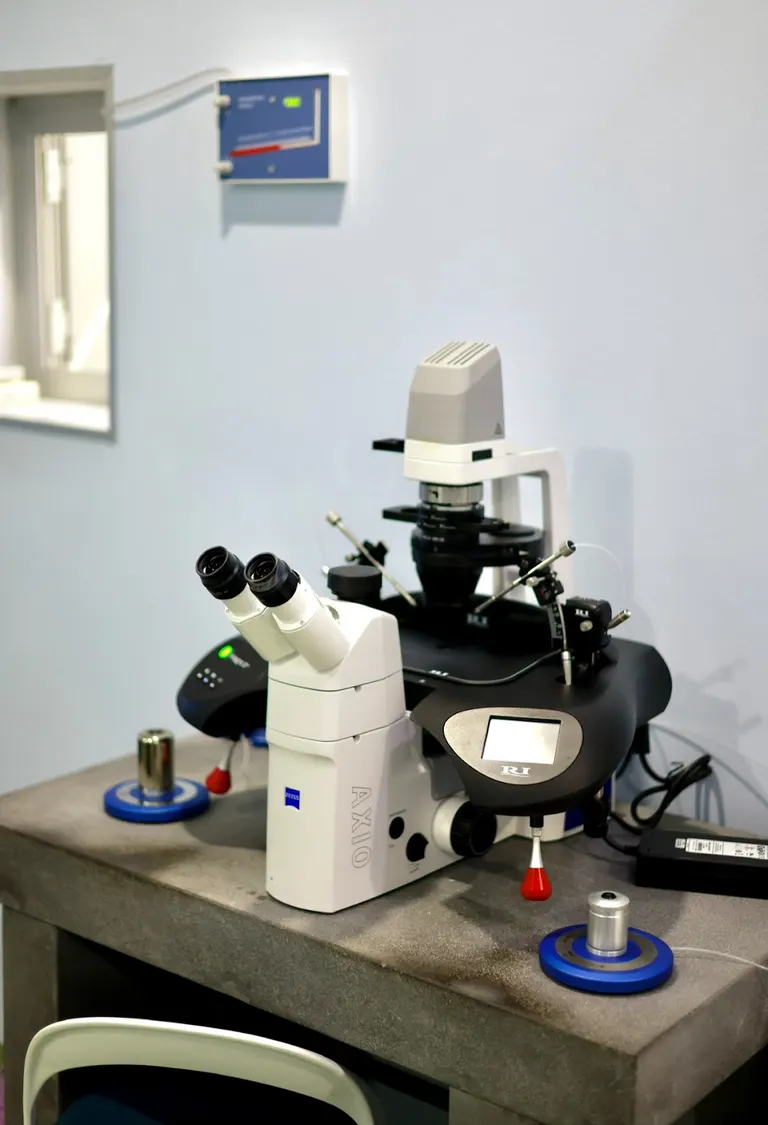
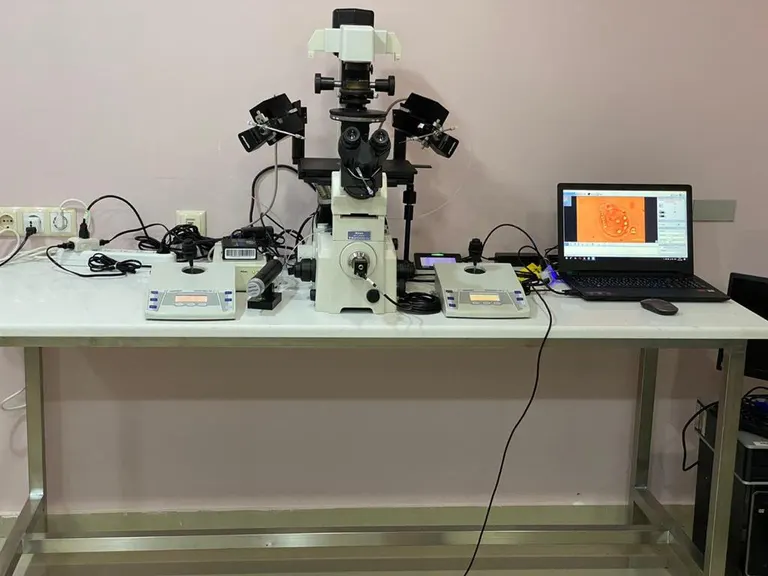
European Fertility Clinic is a reproductive and genetic health clinic located in Tbilisi, Georgia (Krtsanisi II Line 33), specializing in comprehensive infertility treatment for both women and men, including advanced age patients, and offering a full spectrum of assisted reproduction services such as IVF (with natural, stimulated, minimal‑stimulation, long and short protocols), ICSI, pre‑implantation genetic testing, egg, sperm and embryo donation, surrogacy programs, prenatal care and cryoconservation. The clinic highlights consistently high pregnancy rates—particularly for mature‑age patients—and cites a 50 % chance of pregnancy with IVF, reflecting its modern laboratory equipped with state‑of‑the‑art incubators, microscopes and embryology workstations, as well as continual training of its embryologists at leading international centers. A multidisciplinary team of gynecologists, a urologist‑andrologist, endocrinologist, radiologist, cardiologist and certified embryologist delivers personalized, patient‑centered care through tailored stimulation plans, genetic screening and flexible protocol selection, while multilingual coordinators (speaking Georgian, Russian, English and over ten other languages) provide 24/7 support, travel assistance, legal handling of surrogacy contracts, housing for surrogates, and comprehensive counseling, making European Fertility Clinic distinctive for its guarantee program of unlimited IVF/ICSI cycles and transfers until a live birth and its commitment to a non‑commercial, ethically driven approach to building families.
ARTbaby Surrogacy Centre Georgia Clinic | ART healthcare Georgia LTD
Miracle Baby Surrogacy | Surrogacy in Georgia
Popular Destinations in Georgia
Explore popular cities and regions in Georgia.
Frequently Asked Questions
Everything you need to know about fertility treatment in Georgia.
Is reciprocal IVF (ROPA) allowed in Georgia?
expand_more
Reciprocal IVF (ROPA) is permitted in Georgia, allowing both partners in a female couple to be biologically involved in creating a child through egg donation and gestational carrier arrangements.
In May 2025, House Bill 428 was signed into law, confirming that no Georgia law prohibits individuals from accessing IVF services, providing clarity for those seeking fertility treatments. While the legislation doesn’t detail specific parental recognition for ROPA arrangements, Georgia law generally recognizes intended parents as legal parents from conception when using a couple’s genetic material or donor material with written consent; unmarried couples may need to confirm parental rights through legal documentation.
For couples pursuing ROPA, both partners undergo medical assessments, with the egg donor requiring ovarian stimulation and the gestational partner potentially receiving hormonal treatments. Clinics assess factors like age, BMI, lifestyle, ovarian reserve, obstetrical history, and uterine health to determine suitability, and several Georgia clinics, including Reproductive Biology Associates in Atlanta, specifically cater to LGBTQ+ family building and reciprocal IVF.
Is embryo donation legal in Georgia?
expand_more
Embryo donation is legal in Georgia and is governed by specific statutes regarding the legal framework, consent requirements, and anonymity rules.
Georgia was the first state to pass an embryo adoption bill in 2009, establishing a process for intended parents to gain the right to gestate a frozen embryo through adoption procedures. Georgia law views a frozen embryo similarly to a child already born, applying a “best interest of the child” standard during adoption analysis, and considers embryos as “special entities” with the potential for human life, rather than as property.
A written contract, signed by both parties with a notary public and a witness, is required between the embryo donor and the recipient intended parent before any embryo transfer takes place. The contract can include provisions for anonymity, allowing parties to use initials or other designations if they wish to remain anonymous, with the level of openness determined by both families’ desires. Individuals or couples seeking to expand their family can receive donated embryos, provided the recipient intended parent is able to carry a child to full term.
How does IVF work in Georgia?
expand_more
IVF in Georgia involves a multi-stage process, beginning with consultation and assessment and culminating in embryo transfer and pregnancy testing, and is legally affirmed by House Bill 428 passed in 2025.
The typical treatment protocol starts with a review of medical history and diagnostic tests, including blood work, hormone level analysis, ultrasounds, and semen analysis. Ovarian stimulation is then initiated using medications like Clomid and FSH to mature multiple eggs, a phase lasting around two weeks with approximately 5-6 monitoring visits involving blood tests and ultrasounds. After a trigger shot for final maturation, egg retrieval occurs 34-36 hours later, coinciding with a semen specimen from the male partner, followed by fertilization in a laboratory and potential embryo testing (PGD/PGS).
The entire process, from stimulation to embryo transfer, generally takes 4 to 6 weeks, and requires around 5-6 visits for ovarian stimulation and monitoring, with international patients potentially arriving around day 8 or 9 of stimulation for about five days until egg retrieval, followed by visits for embryo transfer and a pregnancy test approximately 12 days later.
Is IVF legal in Georgia?
expand_more
IVF is legal in Georgia, and the country has a legislative framework that supports assisted reproductive technologies (ART), including IVF, surrogacy, and egg/sperm donation.
Georgia’s laws governing fertility treatments are primarily outlined in the Law of Georgia on Health Care, specifically Articles 141-143, which were established in 1997 and amended in 2016. These articles establish general principles for IVF and surrogacy, including the use of donor gametes and embryos, as well as the rights and obligations of all parties involved. For IVF procedures, obligatory written consent from the couple is required for infertility treatment, cases involving the risk of transmitting genetic diseases, or when transferring an embryo to a surrogate mother.
In cases of surrogacy, the intended parents are legally recognized as the parents of the child from the moment of conception, and the birth certificate is issued within one day of birth listing only the intended parents. The use of donor gametes and embryos is permitted for IVF, and surrogates must meet specific criteria, including being between 21 and 35 years old, having at least one child, and passing physical and psychological evaluations.
Is sperm donation legal in Georgia?
expand_more
Sperm donation is legal in Georgia, having been permitted since 1997.
Since 1997, Georgian law has established that a sperm donor does not have any parental rights to a child conceived through their donation, with the intending parents being legally recognized as the child’s parents and named on the birth certificate. Georgia allows for both “open” and “known” donations, where the donor’s identity may be revealed, though some providers do not permit anonymous donations or the use of embryos created with anonymous donors.
Donors are typically expected to be between 21 and 38 years old, and undergo extensive health screenings including tests for infectious diseases and genetic conditions, as well as a psychological evaluation and lifestyle assessments. Donated sperm is also quarantined for at least six months and retested before use.
How much does IVF cost in Georgia?
expand_more
The cost of IVF in Georgia varies depending on the clinic and treatment plan, but a single IVF cycle generally ranges from $3,000 to $15,000 USD, though some estimates reach $30,000 or more when medications are included.
More inclusive estimates for an “all-in” cost per cycle range from $15,000 to $35,000+. When egg donation is involved, costs increase, with packages ranging from approximately $5,000 to $7,000 USD for the donation process itself, or around $15,000 USD including donor compensation and the IVF procedure. Medication costs, which are often separate from the base price, can range from $2,000 to $7,000 USD per cycle.
Additional procedures like ICSI typically add $1,000 to $3,000 USD per cycle, while Preimplantation Genetic Testing (PGT) can add $2,000 to $6,000 USD per cycle to the overall cost.
What is the age limit for IVF in Georgia?
expand_more
In Georgia, there isn’t a strict legal maximum age for IVF treatment, but medical practitioners assess the health risks associated with advanced maternal age.
Most clinics commonly accept women up to 50-53 years old, provided they are in good general health. For women over 43-45, using donor eggs is often recommended due to potential decreases in egg quality, and age limits can be more flexible when donor eggs are used.
While public funding options like Georgia Medicaid’s P4HB program have age requirements of 18 through 44, and some grants have limits for the female partner under 40, individual clinic policies vary, with some like CNY Fertility accepting patients regardless of age.
Are egg donors anonymous in Georgia?
expand_more
Anonymous egg donation is not permitted in Georgia; egg donation must be conducted as either an “open” or “known” donation, allowing for the disclosure of the donor’s identity.
The legal framework in Georgia generally allows for the disclosure of donor identity, and while contracts may use designations like initials for some privacy, this does not prohibit sharing identifying information elsewhere. Although specific legislation detailing a donor-conceived individual’s right to access donor identity at age 18 isn’t explicitly stated, the current laws emphasize open donation and do not allow for anonymous donation.
Recent legislative changes haven’t specifically addressed egg donor anonymity, focusing instead on the privacy of nonprofit donors and volunteers; however, Georgia’s preference for open donation aligns with a growing trend in other states towards banning anonymous donations and granting donor-conceived adults access to donor information upon reaching adulthood.
Why choose Georgia for IVF?
expand_more
Georgia is becoming a popular choice for IVF treatment due to its affordability, advanced medical care, and supportive legal environment.
The country offers significantly lower costs for IVF cycles compared to many Western nations, ranging from $2,000 to $4,000, while similar treatments can cost $12,000–$15,000 in the USA, $6,000–$8,000 in the UK, or $10,000–$12,000 in Canada. Georgia also boasts a well-established legal framework for fertility treatments since 1997, with no residency requirements for foreign nationals pursuing surrogacy and immediate legal recognition of parenthood upon childbirth.
Georgian fertility clinics are equipped with state-of-the-art facilities, and the country has affirmed the legality of IVF through legislation like House Bill 428, enacted in May 2025, providing reassurance for those considering treatment.
What is the IVF success rate in Georgia?
expand_more
IVF success rates in Georgia vary depending on individual factors, but generally range from 50% to 60%, aligning with national averages.
Success rates are notably influenced by age, with women under 35 experiencing the highest rates, ranging from 60-70% in the first cycle according to Georgian clinics. For women aged 35-40, success rates average around 30%, declining to approximately 20-30% for those between 38 and 40. Women over 40 may see success rates between 30-40% using their own eggs, which is higher than the rates often seen in the United States.
Using donor eggs significantly increases the chances of success in Georgia, with rates potentially reaching up to 75%, irrespective of the patient’s age, and cumulative rates averaging between 75% to 95% over multiple cycles.
Can you choose gender with IVF in Georgia?
expand_more
Yes, gender selection for non-medical reasons, such as family balancing, is legally permitted and widely practiced with IVF in Georgia.
Georgia’s laws allow assisted reproductive technologies like IVF and specifically permit genetic testing, not only for preventing genetic diseases but also without prohibiting gender selection for other purposes. Preimplantation Genetic Testing (PGT), including PGD and PGS, is available for this reason, allowing couples to choose the sex of their child.
Although the legal basis for PGT in Georgia is primarily medical – avoiding sex-linked genetic disorders – the lack of restrictions on non-medical gender selection has made it a commonly offered service, with clinics providing detailed informed consent to patients regarding the process and its accuracy.
When was the first IVF baby born in Georgia?
expand_more
Georgia’s first IVF baby was born in 1984.
The birth took place at Reproductive Biology Associates (RBA), which was established in 1983 as the first in vitro fertilization program in the state of Georgia.
Can single women do IVF in Georgia?
expand_more
Yes, single women can pursue IVF in Georgia using donor sperm, as the legal framework supports single individuals building families through assisted reproductive technologies.
Georgia law does not require intended parents to be married, and for single women undergoing IVF with donor sperm, the law recognizes them as the sole legal parent, with the sperm donor having no parental rights or responsibilities, formalized through clinic and sperm bank contracts.
Single women in Georgia have access to donor sperm through FDA-approved sperm banks, where they can select donors based on characteristics like age, race, and physical attributes, and while there isn’t a strict legal age limit for IVF, most clinics follow guidelines suggesting an upper age limit of around 42 to 45 for women using their own eggs.
Can gay couples do IVF in Georgia?
expand_more
While surrogacy is not an option for gay couples in Georgia due to legal restrictions limiting it to married heterosexual couples, IVF procedures with egg and sperm donation are legally available.
Georgian law permits IVF, including the use of anonymous donors who undergo medical and psychological screening, though these services are primarily intended for heterosexual married couples. Some same-sex couples opt to create embryos in Georgia through IVF, intending to then pursue surrogacy in a country where it is legally permitted for them, requiring careful legal planning to protect parental rights in the destination country.
Georgia’s legal framework does not explicitly detail how parental rights are established for non-biological parents in assisted reproduction scenarios, though adoption is an option for same-sex couples, with joint or second-parent adoptions being common.
Is surrogacy legal in Georgia?
expand_more
Surrogacy is legal in Georgia, and the country is known for its clear regulations and accessibility for intended parents, including those from other countries.
Both altruistic and commercial surrogacy are currently legally permitted, although there have been proposals to ban commercial arrangements and allow only altruistic surrogacy, especially for Georgian heterosexual couples. Intended parents are automatically recognized as the legal parents of the child from birth, with the surrogate mother having no parental rights or responsibilities.
Current laws primarily allow surrogacy for heterosexual couples who have been in a union for at least one year, and at least one intended parent must be genetically related to the child. While some sources suggest single women may be eligible for medical reasons, surrogacy is not accessible to same-sex couples or single parents.
Is egg donation legal in Georgia?
expand_more
Egg donation is legal in Georgia, and the country has a clear legal framework supporting assisted reproductive technologies like egg donation.
Georgian law explicitly permits third-party reproduction and defines the parental rights of intended parents, ensuring they are the sole legal parents of any child born through these procedures. Donors typically undergo thorough screening, including medical, genetic, and psychological evaluations, and are generally between 18 and 32 years old with a healthy lifestyle and medical history.
Egg donors are compensated for their time and commitment, with first-time donors often receiving between $8,000 and $15,000, and potentially more for experienced donors.
Can lesbians do IVF in Georgia?
expand_more
Lesbian couples can access IVF using donor sperm in Georgia, but surrogacy is currently legally restricted to married heterosexual couples.
While IVF is legally permissible in Georgia, the legal framework for lesbian couples, especially regarding surrogacy and parental recognition, is complex. Access to donor sperm for IVF procedures is permitted, but securing legal recognition of both partners as parents may require additional steps, particularly if surrogacy is involved. Since same-sex marriage is legal in Georgia, both spouses can be listed on the birth certificate for children born through assisted reproductive technologies within a marriage, but a second-parent adoption may be advisable if one spouse is not a biological parent.
The main restriction for lesbian couples is the inability to utilize surrogacy services within Georgia due to laws that currently favor married heterosexual couples for these arrangements. Careful legal planning and potentially further legal actions, such as adoption, may be necessary to comprehensively secure parental rights, especially in cases involving a surrogate.